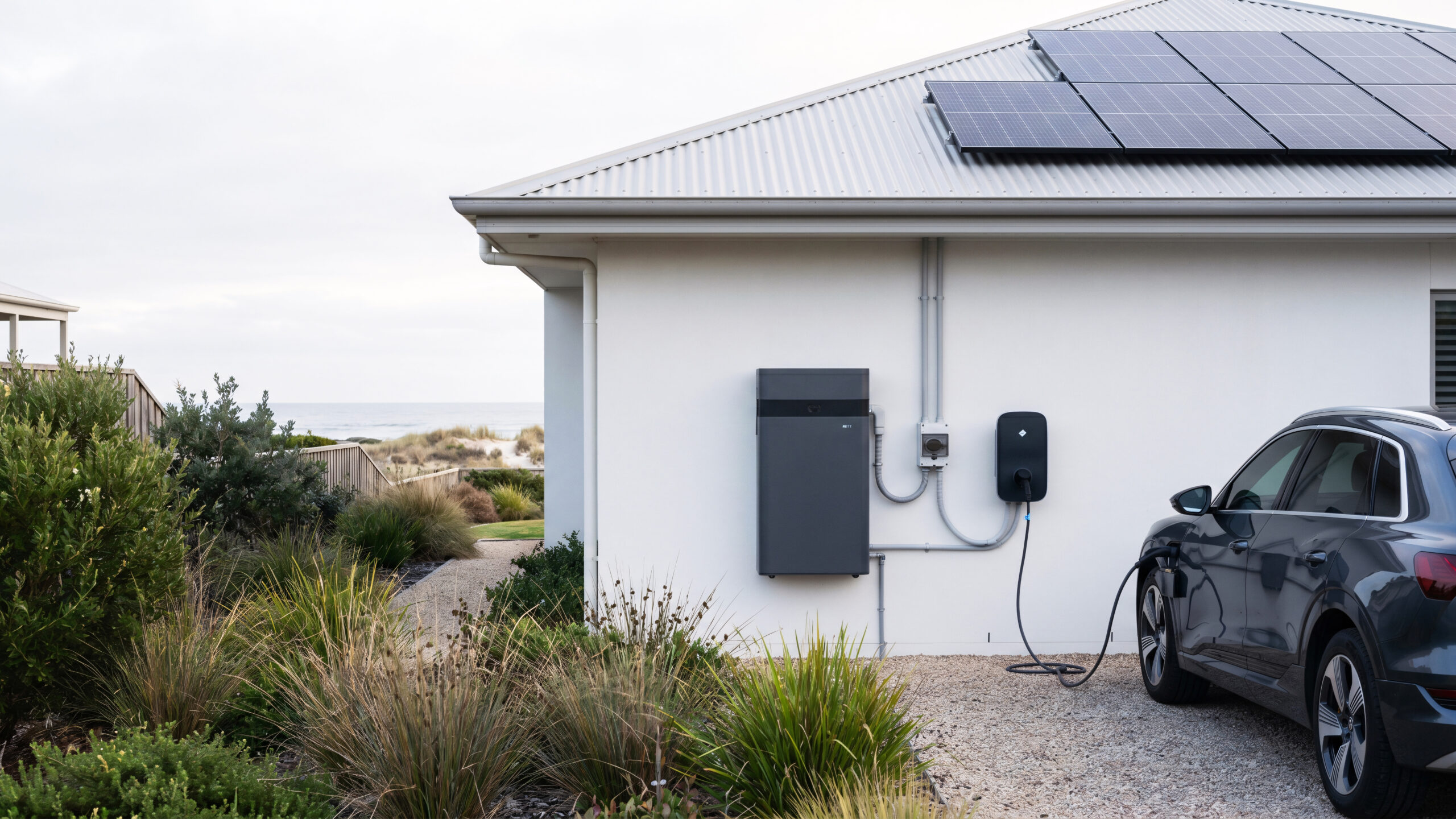
When most people hear “home battery,” they immediately think of solar panels.
But do you actually need solar to install battery backup?
No. A home battery can be installed without solar panels.
A standalone battery can charge from the electrical grid and provide stored power when the grid goes down.
That makes battery storage an option not only for homeowners who already have solar, but also for people who primarily want backup power.
Here’s how it works.
How Does a Battery Work Without Solar?
When solar panels are not part of the system, the battery draws electricity from the grid and stores it for later use.
When a power outage occurs, the system can automatically switch selected household circuits over to battery power.
Depending on how the system is configured, that may keep equipment such as your:
- Refrigerator
- Wi-Fi
- Lights
- Phone chargers
- Medical equipment
- Selected outlets
- Certain larger loads
operating while the grid is unavailable.
Solar Solutions offers battery configurations that can be installed with optional solar integration, allowing homeowners to choose a system based on their backup needs.
What Happens When the Power Goes Out?
A properly installed backup system detects the grid outage and isolates the backed-up portion of the home from the utility.
The battery then supplies stored electricity to those circuits.
Modern systems can perform this transition automatically, so homeowners do not have to manually start the system every time the grid goes down.
Solar Solutions’ current battery systems are designed around automatic outage response.
How Does the Battery Recharge Without Solar?
Once grid power returns, a standalone battery can recharge using electricity from the utility.
That means you do not need rooftop solar in order to restore the battery after an outage.
The biggest difference is what happens during a prolonged outage.
Without solar panels, the battery cannot rely on sunlight to replenish itself while the grid remains unavailable.
Once the stored energy is used, the battery generally has to wait for another available charging source.
Is Battery Backup Without Solar Good for Hurricanes?
It can still provide valuable short-term backup during a storm-related outage.
The important question is how long you want the battery to last.
A battery storing a fixed amount of electricity will eventually run down if the grid stays off and there is no solar generation available to recharge it.
That makes energy management particularly important during longer outages.
A homeowner who wants backup for a refrigerator, Wi-Fi, lights, and a few outlets may need considerably less energy than someone trying to run air conditioning and other larger loads.
Is a Battery Without Solar the Same as a Generator?
No.
Both can provide electricity when the grid fails, but they create or store energy differently.
A battery stores electricity in advance.
A generator produces electricity using a fuel source such as natural gas or propane.
A battery is quiet, automatic, and does not require fuel during operation, but the amount of energy available is limited by how much electricity is stored.
A generator may continue operating for longer periods if sufficient fuel is available.
Which approach makes more sense depends on the homeowner’s priorities, expected outage duration, electrical needs, and maintenance preferences.
Can I Add Solar Panels Later?
Yes, depending on how your battery system is designed.
For some homeowners, this can make a battery-first approach attractive.
You may decide that outage protection is the immediate priority and install battery storage now, then add solar panels later.
If that is something you are considering, tell your installer before the battery system is designed.
Choosing equipment with future solar integration in mind can make the later upgrade easier.
What Are the Benefits of Adding Solar Later?
Once solar panels are integrated with a compatible battery system, they can do more than reduce reliance on grid electricity during normal operation.
During certain grid outages, a properly designed solar-plus-storage system may also use daytime solar production to help replenish the batteries.
That creates an important advantage during longer outages.
Instead of relying solely on whatever energy was stored before the power went out, the home may be able to generate additional energy whenever adequate sunlight is available.
Should I Get Solar and a Battery at the Same Time?
There is no one answer for every homeowner.
Installing both at the same time can make sense if your goals include:
- Reducing utility dependence
- Using more of your own solar energy
- Having backup power during outages
- Creating a more integrated energy system
A battery-only installation may make more sense if your immediate priority is simply backup power.
The important part is planning for both your current needs and what you may want several years from now.
How Big of a Battery Do I Need Without Solar?
Battery size depends on what you want to keep running.
Start by asking:
What absolutely needs electricity during an outage?
Then consider how long you want those items to operate.
For example, backing up a refrigerator, Wi-Fi, lights, and phones is very different from trying to operate central AC and most of the home.
Solar Solutions designs battery systems around the homeowner’s actual energy use and backup priorities rather than using the same configuration for every house.
Is a Standalone Battery Right for Your Tampa Home?
You do not need solar panels to start using home battery storage.
For homeowners mainly concerned about Florida storms, short outages, or keeping essential equipment operating, a standalone battery can be worth considering.
And if you decide to add solar later, the system may be able to evolve with you.
Solar Solutions can help you compare battery-only, solar-plus-battery, and generator backup options and determine what makes sense for your Tampa home. Contact our team to schedule a consultation.